Planners and engineers, not a pitch team
The people who scope your study are the people who run the analysis and sign the report. No handoff, no junior bench learning on your budget.
Transportation engineering and planning
LSC Nexus studies how intersections, corridors and networks actually perform, then plans, analyses and designs the changes that make them safer and more reliable, for people walking, cycling, riding transit, driving and moving freight.
A worked example, not a past project. Conflict-point counts are the standard figures for a four-leg intersection and a single-lane roundabout.
The firm
Nobody sets out to build a dangerous intersection. They get built anyway, one reasonable decision at a time.
The counts, crash records, signal timings, speed data and public complaints that would have caught it are usually already sitting in an agency's files. Our work is to read them together, model what changes, and hand back a recommendation that survives review, council and the public meeting.
The people who scope your study are the people who run the analysis and sign the report. No handoff, no junior bench learning on your budget.
We write to the methods your reviewers expect and hand over the data, models and assumptions, so a finding can be checked rather than taken on trust.
Planning, analysis and study work is delivered by our own staff. Work that constitutes the practice of engineering is performed under the responsible charge of a licensed Professional Engineer, in house or through our teaming partners.
Modelling, GIS, dashboards and applied AI are run in house rather than subcontracted, which is why our studies tend to leave a working tool behind them.
Practice areas
Most engagements combine two or three of them. The full service list is below.
Corridor and small-area studies, multimodal and long-range plans, transit and active transportation planning, comprehensive plan amendments, parking and access management.
Traffic impact analysis, capacity and level-of-service, signal warrants and timing, turn lane warrants, queuing and speed studies, and the exception requests that go with them.
Crash diagnosis and countermeasure selection, road safety audits, Safe System and Vision Zero action plans, plus the ergonomics side: sight lines, sign legibility, driver expectancy and wayfinding.
Signal design, signing and pavement marking, geometric layout of intersections and roads, roundabouts, traffic calming, bicycle and pedestrian facilities, and accessible design.
Concepts of operations, signal system and TSMO support, detection and field data, connected and automated vehicle readiness, and keeping deployed systems reporting once the ribbon is cut.
Travel demand modelling and microsimulation, GIS and spatial analysis, count and probe data programmes, dashboards and public-facing map tools, applied AI for detection and forecasting.
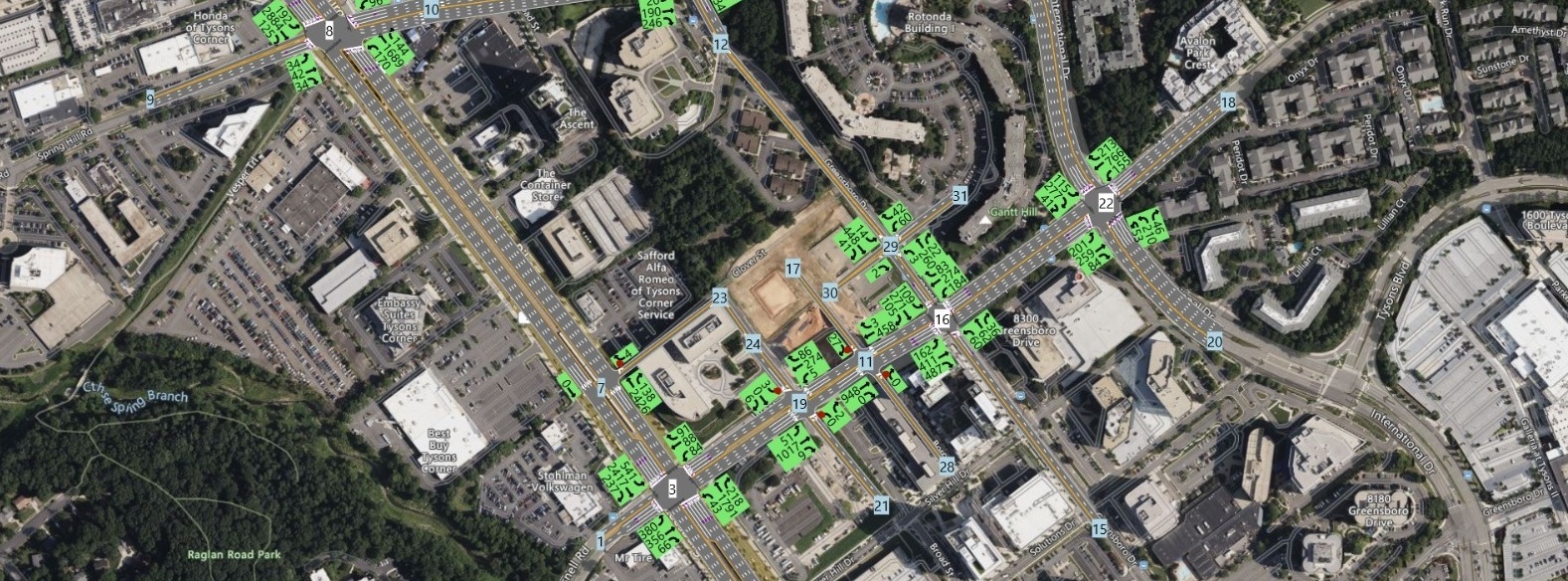
Freight is one mode among several, and it is where a transportation network meets a business. We plan truck routes and freight corridors, and we take on standalone supply chain work: network and route design, warehouse and inventory flow, carrier and vendor evaluation, and 3PL/4PL coordination for organisations without an in-house logistics function.

Studies, planning, analysis and modelling are delivered by LSC Nexus staff. Deliverables that constitute the practice of engineering, including sealed drawings, are prepared under the responsible charge of a licensed Professional Engineer, in house or through our teaming partners. We will say which arrangement applies before a scope is signed.
Services
If a line item in your solicitation isn't here, ask. It is usually a naming difference rather than a capability gap.
How we work
Sequence matters. We don't analyse before we can see the ground truth, and we don't leave before your staff can rerun what we built.
One working session to state the question as a decision: which intersection, which corridor, which policy, and what has to hold up when it's challenged. You get a written scope with a fixed fee.
1-2 weeks
Counts, crash records, speeds, signal timing, probe data and a site visit. Where the data doesn't exist, we collect it. Most studies are only as good as this stage, so it comes before any promise.
2-4 weeks
Operations, safety and modelling work run in the methods your reviewer expects, with the alternatives compared on the same basis rather than the preferred one written up alone.
3-8 weeks
Report, exhibits and drawings for review, council or public comment, with the data, models and assumptions handed over so your team can rerun them next year without calling us.
Ongoing, optional
Contact
We'll reply within two business days with either a straight answer or questions that decide the scope.